How to Make a Roblox Game using AI
What the AI tools can genuinely do in 2026, where they run out of road, and how to get from an idea in your head to an experience people can actually play.
Two years ago, making a Roblox game meant learning Luau, learning Studio, and spending a few months before anyone else could play the thing. That's changed. You can now describe a game in a sentence and get something playable back. What hasn't changed is the part after that — a published game with no players is still a hobby project.
This guide walks the whole path: how Roblox games are actually put together, what Roblox's own AI tools do inside Studio, where a prompt-to-game tool takes over, and what to do on launch day. No hype about robots replacing developers — just what works right now.
First: what a Roblox game is actually made of
Before touching any AI tool it helps to know what you're asking it to produce, because that's what separates a prompt that works from one that gives you a flat baseplate.
Every Roblox experience is a place file — a 3D world — plus scripts written in Luau that make things happen in it. The scripts are where the actual game lives. They handle the core loop (what you repeatedly do), the economy (what you earn and spend), persistence via data stores (so progress survives a rejoin), the UI, and the multiplayer logic that keeps every player's screen in agreement.
When people say a Roblox game "feels unfinished," they almost always mean one of those systems is missing. The map looks fine; there's just nothing to come back for. Keep that in mind — it's the single biggest thing to get right, whether a human or an AI writes it.
The core loop is the whole game
Pick any Roblox hit and you can state its loop in one line. Grow a Garden: plant, wait, harvest, sell, buy rarer seeds. Blade Ball: parry, survive, get faster. A tycoon: collect income, buy the next dropper, collect faster. If you can't say your loop in a sentence, no tool is going to rescue the design — and if you can, you've already written most of your prompt.
Roblox Studio's built-in AI: useful, but narrow
Roblox ships AI tooling inside Studio itself, and it's worth knowing what it's for. The Assistant sits in the editor and answers scoped questions about the place you already have open. Ask it to write a script that opens a door when a player steps on a pad, and it'll do that. Paste an error and it'll usually explain what broke. There are generative helpers for materials and textures too, so you can describe a surface instead of hunting the toolbox for one.
It's genuinely handy, and if you're already comfortable in Studio you should use it. But notice the shape of what it does: it works at the level of one object, one script, one problem at a time, inside a project you've already set up. It assumes you know what a RemoteEvent is, where server scripts go, and how to structure a data store. It speeds up the typing, not the deciding.
So if you're starting from nothing, Studio's Assistant leaves you with the hard part: knowing what to build in the first place, and assembling twenty separate pieces into something coherent.
Prompt-to-game: starting from a sentence instead
The other approach skips the setup entirely. Instead of opening Studio and asking for help with one script, you describe the game you want and get a whole build back — systems, map, scripts, wired together.
That's what our Roblox AI game maker does. You type something like "a tycoon where you run a lemonade stand and expand into a franchise" and it works out which systems that loop needs — income generation, an upgrade tree, saved progress, a shop UI — then generates a map to house them and writes the Luau behind it. What lands is a playable game, not a screenshot of one.
How to write a prompt that gives you something good
The difference between a vague first build and a strong one is almost entirely in the prompt. Three things move the needle:
- Name the loop, not the vibe. "A scary game" gives the tool nothing to build. "Players search a dark facility for four fuses while something hunts them" describes an objective, a threat and a win condition.
- Say how progress works. What do players earn, what do they spend it on, and what makes the next hour better than the last? This is what generates your economy and upgrade systems.
- Mention the social hook. Trading, leaderboards, co-op, PvP — Roblox is a social platform, and the games that hold players almost always give them a reason to involve someone else.
Then keep prompting
Don't treat the first build as the deliverable. Play it, find what's boring, and say so: rebalance the economy, add a second map, change how pets hatch. Each pass edits the existing build rather than starting fresh, so the game converges instead of resetting. This iterative stretch is where an average generated game turns into one worth launching.
Publishing it
Once it plays the way you want, publish it to your own Roblox experience. A few things worth doing before you hit the button:
- Test with other people. Solo testing hides every multiplayer bug you have. Get four or five people in at once before launch.
- Sort your icon and thumbnails. These do more for your click-through rate than anything inside the game. If art isn't your strength, it's the cheapest thing to outsource on the thumbnail marketplace.
- Check mobile. Most Roblox sessions are on phones. If your UI only works on a 1080p monitor, most of your players bounce in the first thirty seconds.
The part everyone skips: getting players
Here's where most "I made a game with AI" stories quietly end. The game is live, the creator refreshes the visit counter, and it sits at eleven. That isn't a reflection of the game — it's what happens to almost every new experience, AI-built or not. Roblox's discovery algorithm surfaces games that already have engagement, which is a hard loop to break into from zero.
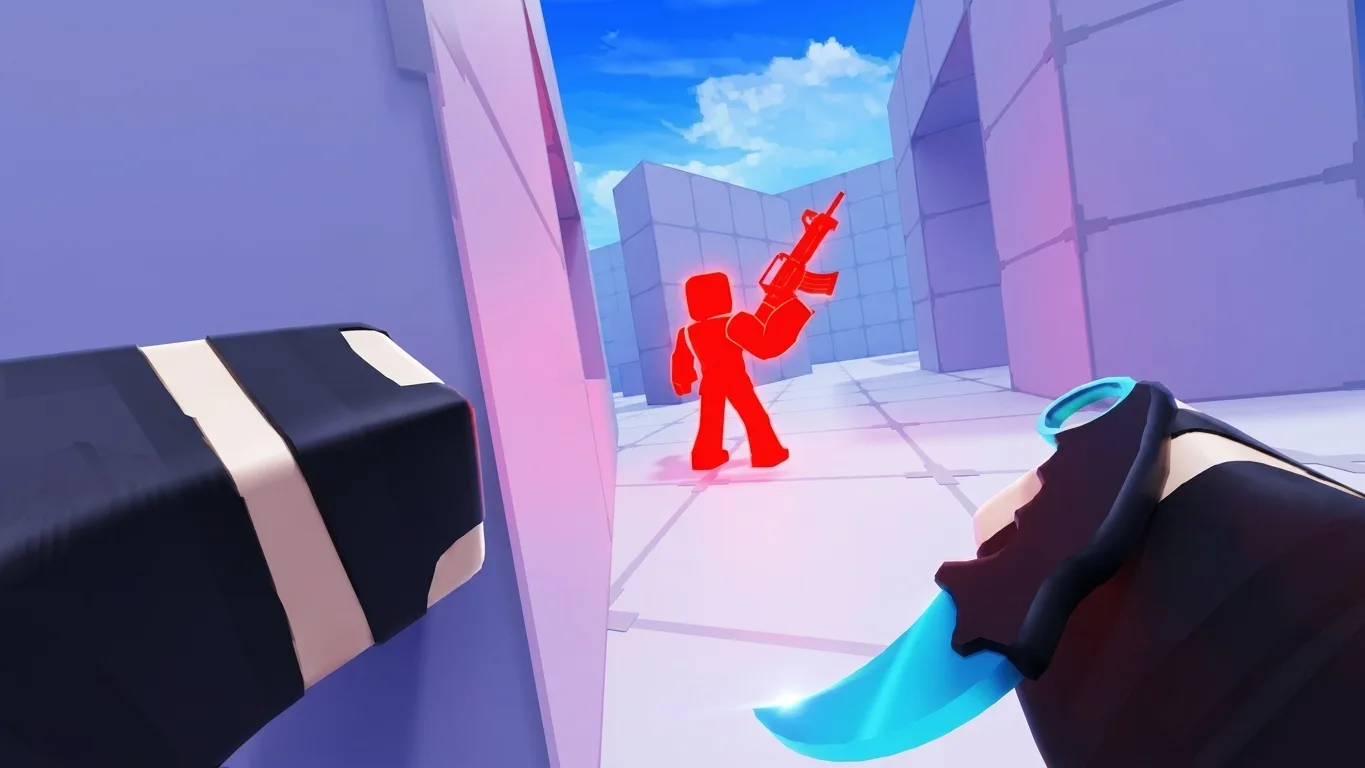
What actually works is other people playing your game in front of an audience. A Roblox TikToker with 200k followers posting a clip of your tycoon will do more in an afternoon than weeks of hoping the algorithm notices you. That's the entire reason BLOXG exists: you can browse vetted Roblox creators by platform, audience size and genre, brief a campaign, and pay through escrow so nothing is released until the work lands.
So, can AI make your Roblox game?
It can build it, and it can build it far faster than you could alone. What it can't do is decide what's worth building or make people care once it exists. Those stay yours.
The realistic 2026 workflow looks like this: pick a loop you actually find interesting, describe it clearly to the game maker, iterate on the build until it's genuinely fun, publish under your own account, then put real budget behind a creator campaign. Every step in that chain has gotten dramatically cheaper — the discipline of doing all four is still what separates games with players from games without.
Common questions
Can AI make a full Roblox game on its own?
It can build a working first version — the core loop, the systems behind it and a populated map — but it won't hand you a finished hit. Treat the output as a strong starting point you keep shaping, the same way a first draft works in any other medium.
Do I need to know Luau to use AI game tools?
No. Modern tools write the Luau for you from a plain-English description. Knowing the language helps when you want to change something precisely, but it isn't a prerequisite for getting a playable game.
Is the game I generate actually mine?
With BLOXG's game maker, yes — the place file, the scripts and the generated assets are yours. You publish under your own Roblox account and keep everything the game earns.
What does Roblox Studio's built-in AI actually do?
Studio's Assistant handles scoped tasks inside an open place: generating a script for one behaviour, explaining an error, or creating simple materials and textures. It works at the level of individual objects and scripts rather than designing a whole game for you.
How do I get players once the game is built?
Publishing is the halfway point. Most new experiences get discovered through creators rather than the algorithm, so a launch campaign with Roblox TikTokers, YouTubers or streamers is usually what turns a published place into a played one.