A winning Roblox marketing strategy is not a single tactic - it is a coordinated plan that matches the right channels to your game's stage, budget, and genre. Most developers fail at Roblox marketing because they run random tactics without a strategy. BLOXG's playbook organizes Roblox marketing around four pillars: retention, distribution, community, and optimization.
This page walks through the complete strategic framework we use for every client. If you want a personalized strategy for your specific game, request a free growth review - we will audit your game and deliver a custom plan within 48 hours.
Trusted by 500+ Roblox developers. 4.9 stars across 550+ verified reviews.
Stage-Specific
Different strategies for launch, growth, scale, and maturity stages.
Data-Driven
Every recommendation backed by real data from 850+ campaigns.
Full Funnel
Strategy covers acquisition, retention, monetization, and community together.
Actionable
No theory - every recommendation comes with specific tactics and benchmarks.
The Four Pillars of Roblox Marketing Strategy
Pillar 1: Retention. No strategy works without retention. A game with 5% D1 retention cannot scale profitably regardless of distribution. Fix retention first using our game audit and retention guide. Target: 20%+ D1, 10%+ D7 before scaling spend.
Pillar 2: Distribution. Once retention is solid, layer distribution across Roblox ads, TikTok, YouTube, and influencers. Distribution should match your budget and genre - different combinations work for different situations.
Pillar 3: Community. Players who join Discord or follow your social accounts are 3-5x more likely to return. Build community from day one using Discord promotion and consistent social content.
Pillar 4: Optimization. Continuous data-driven iteration on creative, targeting, and budget allocation. This pillar is where most developers lose - they set and forget instead of reviewing and adjusting.
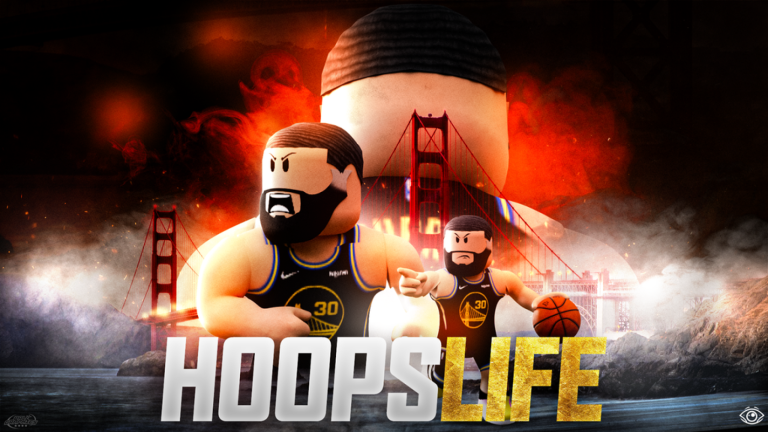
Hoops Life - one of Roblox's biggest sports games. BLOXG runs promotion campaigns for developers building in every one of these categories.
Roblox Marketing Strategy by Game Stage
Pre-launch strategy (0 DAU): Focus entirely on game quality, retention tuning, and community seeding. Minimal paid spend. Build Discord, produce teaser content, and line up creator partnerships for launch. See our launch checklist.
Launch strategy (0-10K DAU): Maximize day-one momentum with coordinated ad spikes, creator waves, and algorithm activation. Budget heavy in the first 7-14 days. See our launch marketing service.
Growth strategy (10K-100K DAU): Shift to multi-channel scale with ongoing creative refresh, expanded creator programs, and aggressive optimization. Budget typically $2,000-10,000/month.
Mature strategy (100K+ DAU): Focus on LTV expansion, community depth, monetization optimization, and brand partnerships. Marketing becomes about margin rather than just acquisition.
Everything in this section assumes the game already exists. If it doesn't, the Roblox game maker is the shortest path to something you can point players at — describe it in plain English and it writes the Luau.
Roblox Marketing Strategy by Genre
Simulator games benefit most from TikTok progression content and Sponsored Experiences. Progression visuals are inherently shareable. Obby games** thrive on YouTube Shorts fails and TikTok reaction content.
Tycoon games work well with before/after TikTok content and YouTube sponsorships showing massive upgrades. RPG games** need long-form YouTube content to showcase depth, with Discord communities for lore and social interaction.
Horror games are uniquely well-suited to viral TikTok reaction content. Roleplay games** depend heavily on Discord community and word-of-mouth marketing.
How to Allocate Your Roblox Marketing Budget
A balanced Roblox marketing budget typically splits across five channels: 40% paid ads (Sponsored Experiences, TikTok Ads, YouTube Ads), 25% influencer/creator partnerships, 15% organic content production, 10% community building, and 10% testing and optimization.
Adjust the mix based on your stage and genre. Launches should front-load paid ads and creators. Mature games can reduce paid spend and increase community investment. Low-retention games should pause paid spend entirely until retention is fixed.
Real feedback from Roblox developers, studio founders and indie creators who grew their games with our Roblox marketing, promotion and advertising services.
4.9
Based on 550+ reviews from Roblox developers
5 star
92%
4 star
7%
3 star
1%
2 star
0%
1 star
0%
Roblox player acquisition done right
BLOXG helped us scale from 1k to 28k concurrent players. Their Roblox player acquisition strategy combined TikTok, Shorts and Discord perfectly. Highly recommend for any serious Roblox developer.
Full Marketing Package
Liam O'ConnorStudio Owner - Zombie Survival Z
Our Roblox game launch was a massive success
BLOXG handled our entire Roblox game launch. Day one we hit 95k visits, by week two we were sitting at 2.4M. The launch strategy alone was worth the cost ten times over.
Roblox Game Launch
Priya NairRoblox Developer - Magic Academy RP
Perfect Roblox Discord promotion strategy
BLOXG's Roblox Discord promotion brought in 14,000 new server members who actually played the game. Our Discord retention is at 62% and it feeds daily players back to the experience.
Discord Growth
Isabella RossiIndie Dev - Pasta Tycoon
Loved working with this Roblox marketing agency
BLOXG feels like an extension of our studio. Our Roblox marketing results speak for themselves, 180k MAU up from 22k in two months. The weekly strategy calls are gold.
Full Marketing Package
Mei ChenRoblox Developer - Bakery Life
Grow Roblox game organically with TikTok
BLOXG's Roblox TikTok promotion strategy gave us 42M views across three months. Our DAU climbed from 1.5k to 24k purely from organic TikTok traffic. Unreal team.
TikTok Promotion
Oliver BlakeIndie Dev
Roblox YouTube Shorts strategy worth every penny
We doubled down on Roblox YouTube Shorts with BLOXG and never looked back. 11M total views and an estimated 190k new players in six weeks. Cost per install beat every other channel.
YouTube Shorts
Zara AhmadGame Studio Founder - Desert Expedition
Roblox promotion with real strategy behind it
BLOXG does not just spray content. Their Roblox promotion plan is built around retention hooks. Our D7 went from 4% to 19% because they picked creators whose audience actually sticks.
Influencer Marketing
Lina HaddadRoblox Developer - Cafe Manager
Best Roblox marketing investment I have made
If you are serious about Roblox marketing just hire BLOXG. The strategy, execution and reporting are years ahead of anyone else. We 9x'd our DAU in 70 days.
Full Marketing Package
Carla MendozaRoblox Developer
Grow Roblox game with a real strategy
BLOXG helped us grow Roblox game DAU from 4k to 62k over 90 days. No tricks, no fake players. Real retention, real monetization, real results.
Full Marketing Package
Taylor ReedRoblox Developer - City Life RP
Frequently Asked Questions
Common questions about roblox marketing strategy. Still have questions? Contact our team.
What is a Roblox marketing strategy?
A Roblox marketing strategy is a coordinated plan that combines retention, distribution, community, and optimization to grow daily active players. It accounts for game stage, genre, budget, and goals.
How do I build a Roblox marketing strategy from scratch?
Start by auditing retention and core loops. Then pick 2-3 distribution channels that match your genre and budget. Layer community building and set up optimization review cadences. BLOXG's free growth review does this end-to-end.
What is the best Roblox marketing strategy in 2026?
The best strategies combine TikTok organic, Roblox Sponsored Experiences, YouTube creator sponsorships, and Discord community building, all tuned to genre and stage.
How much should I budget for a Roblox marketing strategy?
Indie games start at $200-500/month. Growing games spend $1,000-5,000. Scaling games spend $5,000-25,000+.
Should my Roblox marketing strategy focus on paid or organic?
Both. Pure organic strategies cap out quickly. Pure paid strategies have weak retention loops. Balance both for compounding growth.
How often should I review my Roblox marketing strategy?
Tactical review weekly, strategic review monthly, major re-planning quarterly.
Can BLOXG creators build my Roblox marketing strategy for me?
Yes. Several services-marketplace creators offer strategy and audit packages tailored to your game's stage, genre, budget, and goals. Browse the [services marketplace](/marketplace/services) Custom category to find them.
Does Roblox marketing strategy differ by game genre?
Yes. Simulator, obby, tycoon, RPG, horror, and roleplay genres each require different channel mixes and creative formats.
What KPIs should my Roblox marketing strategy target?
D1/D7/D30 retention, cost per retained player, ROAS, community growth rate, and DAU growth rate.
How do I get started with a Roblox marketing strategy?
Browse the [services marketplace](/marketplace/services) Custom category for strategy creators, or request a free growth review for a tailored creator shortlist within 48 hours.
Related Roblox Marketing Resources
Explore more BLOXG services, guides and tools to grow your Roblox game.